
How to Use ChatGPT for Business: Step-by-Step Guide (2026)
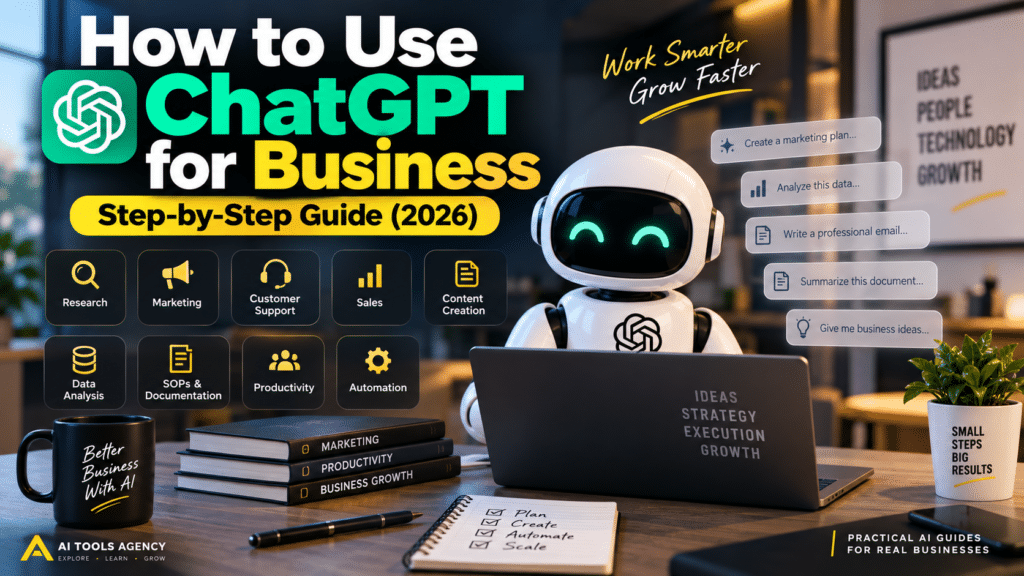
Artificial intelligence is no longer useful only for large technology companies. Today, entrepreneurs, freelancers, agencies, marketers, and small businesses can use ChatGPT to reduce repetitive work, organize information, research markets, analyze data, and create better first drafts. However, simply opening ChatGPT and typing “help my business” usually produces generic results. Learning how to use ChatGPT for business starts with understanding the problem you want to solve, providing the right context, and reviewing the output before using it. In this guide, you will learn a practical step-by-step system for using ChatGPT across research, marketing, customer support, documentation, data analysis, productivity, and automation. If you are still exploring different AI platforms, visit our AI Tools hub for reviews, comparisons, automation resources, and practical guides. Editorial Note: AI products change quickly. The capabilities and business-plan information in this article were checked against OpenAI’s official documentation in September 2026. Always review current plan details before purchasing. How to Use ChatGPT for Business: Quick Overview Businesses can use ChatGPT for many different types of work. Business Task Example Use Market Research Analyze competitors and customer needs Marketing Generate campaign ideas and content drafts Customer Support Draft replies and support documentation Sales Prepare outreach and follow-up messages Data Analysis Analyze spreadsheets and identify trends Documentation Create SOPs, checklists, and policies Meetings Summarize notes and identify action items Content Create outlines, briefs, and editing suggestions Productivity Organize tasks and simplify information Automation Build repeatable AI-assisted workflows ChatGPT can also search current web information, perform deeper research, work with uploaded files, and analyze structured data in supported experiences. OpenAI describes Search as useful for current information and Deep Research as a more comprehensive multi-source research workflow. What Can ChatGPT Do for a Business? The value of ChatGPT comes from its flexibility. Instead of buying a separate AI tool for every small task, businesses can use one assistant across several workflows. For example, a marketing team could research a competitor, create a campaign brief, rewrite an email, summarize a report, and analyze campaign data within the same broader environment. Likewise, a small business owner might use ChatGPT to prepare customer responses, develop a social media calendar, organize expenses, and create internal procedures. ChatGPT can also analyze uploaded spreadsheets, PDFs, text files, and structured data. Depending on the task, it can summarize trends, identify outliers, create tables, produce charts, and perform code-backed analysis. For more practical business-focused AI content, explore our Business & Productivity AI section. How to Use ChatGPT for Business Step by Step The best results usually come from a structured process rather than one vague prompt. Step 1: Identify the Business Problem Start by deciding what you actually want ChatGPT to help with. Avoid prompts such as: Help me grow my business. That request is too broad. Instead, define a clear task. For example: Identify five ways a small accounting firm could reduce repetitive administrative work using AI. Or: Create a seven-day follow-up sequence for leads who requested a quote but did not respond. A clear objective gives the AI something specific to solve. Step 2: Provide Relevant Business Context ChatGPT cannot automatically know everything about your company. Therefore, provide the information that affects the result. Useful context can include: For example, instead of saying: Write a Facebook ad. Try: Write three Facebook ads for a UK mortgage brokerage targeting first-time buyers. Focus on clear language, low-deposit concerns, and a professional but approachable tone. Avoid making guaranteed approval claims. The second prompt gives ChatGPT much more useful context. How to Use ChatGPT for Business Research Research is one of the strongest business applications for a general-purpose AI assistant. You can use ChatGPT to investigate: For quick current information, Search can help gather recent sources. Meanwhile, Deep Research is designed for more involved questions that require information to be collected and synthesized across multiple sources. Example Business Research Prompt After receiving the result, open the important sources yourself. AI research can save time, but important claims still need verification. How to Use ChatGPT for Marketing Marketing teams can use ChatGPT throughout the campaign process. Potential uses include: However, avoid publishing every AI-generated draft exactly as it appears. Instead, use ChatGPT to create the first version. Then add your own examples, customer knowledge, brand voice, evidence, and experience. If blogging is an important part of your strategy, our guide to the best AI writing tools for bloggers covers additional platforms for research, writing, and editing. Example Marketing Prompt Notice how the prompt defines the audience and output structure. As a result, the response should be considerably more useful. How to Use ChatGPT for Customer Support Customer support teams repeatedly answer similar questions. ChatGPT can help draft: For example: A human should still review important customer communications before sending them. This is especially important when the message involves refunds, legal issues, sensitive data, or a significant customer complaint. How to Use ChatGPT for Sales ChatGPT can also support sales teams. Instead of automatically sending generic AI messages, use it to improve preparation and personalization. Possible uses include: Example Sales Prompt Afterward, personalize the message with information relevant to that particular prospect. How to Use ChatGPT for Business Data Analysis Businesses often collect data but struggle to turn it into useful information. ChatGPT can analyze supported spreadsheets and data files. OpenAI’s documentation says data analysis can summarize trends and outliers, create tables and charts, and run calculations or statistical analysis. For example, you might upload: Then ask: OpenAI also provides ChatGPT experiences inside Excel and Google Sheets that can help users build, update, explain, and review spreadsheets directly, subject to plan and availability. Nevertheless, review important calculations before using them in financial or operational decisions. How to Use ChatGPT for SOPs and Documentation Many businesses rely on processes that exist only in someone’s head. That becomes a problem when another employee needs to perform the task. ChatGPT can help turn notes into: Example SOP Prompt The final sentence is important. Telling ChatGPT not to invent missing policies reduces the chance

