


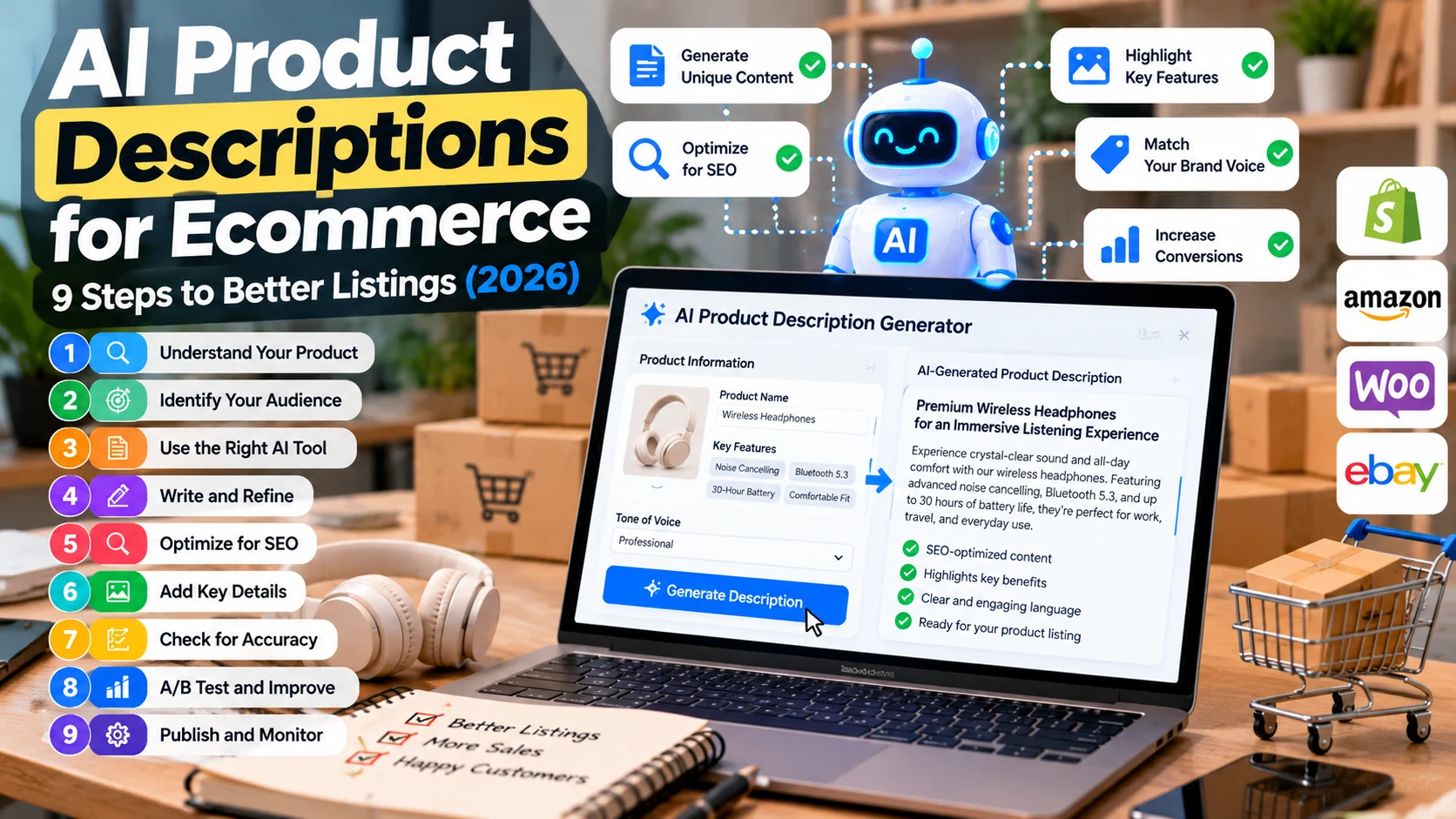
AI tools for ecommerce can help a small online store prepare product content, answer routine enquiries and analyze repeated customer questions. But a generated product description cannot correct incorrect inventory, and automated recommendations should not mislead buyers. The strongest starting point is a clean product catalogue and clear operating rules.
Quick answer: Use AI to reduce repetitive work around product data and customer communication, while keeping prices, stock, claims and refunds governed by your real commerce platform. Measure how many useful tasks are completed correctly, not just how many words are generated.
1. Product description drafting
Turn accurate structured product attributes—materials, dimensions, compatibility, warranty and intended use—into readable customer copy. Use the product database as the source of truth. Check translations, safety claims and prohibited guarantees before publishing. Never invent specifications or customer testimonials to fill gaps.
2. Catalogue cleanup and categorization
AI can suggest categories, tags and missing attribute flags. Keep a human review queue for ambiguous products. A wrong size, model compatibility claim or product category can create returns even if the description sounds professional.
3. Customer support replies
Draft responses to questions about delivery areas, return windows and product care using approved policies. Escalate payment disputes, damaged-order claims and account issues. A support bot should identify when an answer is outside its knowledge and offer a real human contact method.
4. Review theme analysis
Group authentic reviews into recurring positive and negative themes, such as sizing confusion or packaging complaints. Use this to prioritize product-page improvements. Do not manufacture reviews or reword customer feedback as if the reviewer said something different.
5. Product discovery and search support
Natural-language search can help customers describe what they want. The underlying catalogue still needs dependable stock status, filter rules and product compatibility data. Test whether recommendations return available products and disclose when results are ranked by promotions or sponsored placement.
6. Inventory forecasting assistance
Use historic orders, seasonality, promotions and lead times to create forecasts, then compare them with a simple baseline. An AI model does not know supplier delays or market shocks automatically. Keep reorder rules explainable and subject to review.
7. Post-purchase communication
AI can prepare shipping-update templates, setup instructions and care advice. Order status, tracking numbers and delivery estimates must come from the real order-management system—not guesses generated by a model. Respect messaging consent and unsubscribe preferences.
Data and integrations checklist
- Product catalogue accuracy and inventory freshness
- Return and shipping policies with named owners
- Permissions for CRM and customer-order records
- Human approval for discounts, claims and public content
- Monitoring for wrong answers and unexpected costs
- Ability to stop automation or revert problematic updates
How to prioritize ecommerce AI projects
Prioritize high-volume pain points with measurable outcomes. Product description assistance may reduce editing time, while support reply preparation may reduce handling time. Track error and return rates as well, so faster output does not disguise lower quality.
FAQ: Will AI increase ecommerce sales automatically?
No. Growth depends on products, pricing, traffic, trust, customer experience and execution. AI is only one possible support tool. Do I need an AI app installed directly in my storefront? Not always; a controlled export and review process may be safer for a first pilot.
Your Next Step
If you run an ecommerce store, describe your catalogue size, platform and the workflow consuming the most manual time. Contact AI Tools Agency to discuss a scoped evaluation or workflow pilot.
Browse the AI for Small Business library or visit our blog for more practical guides.

